
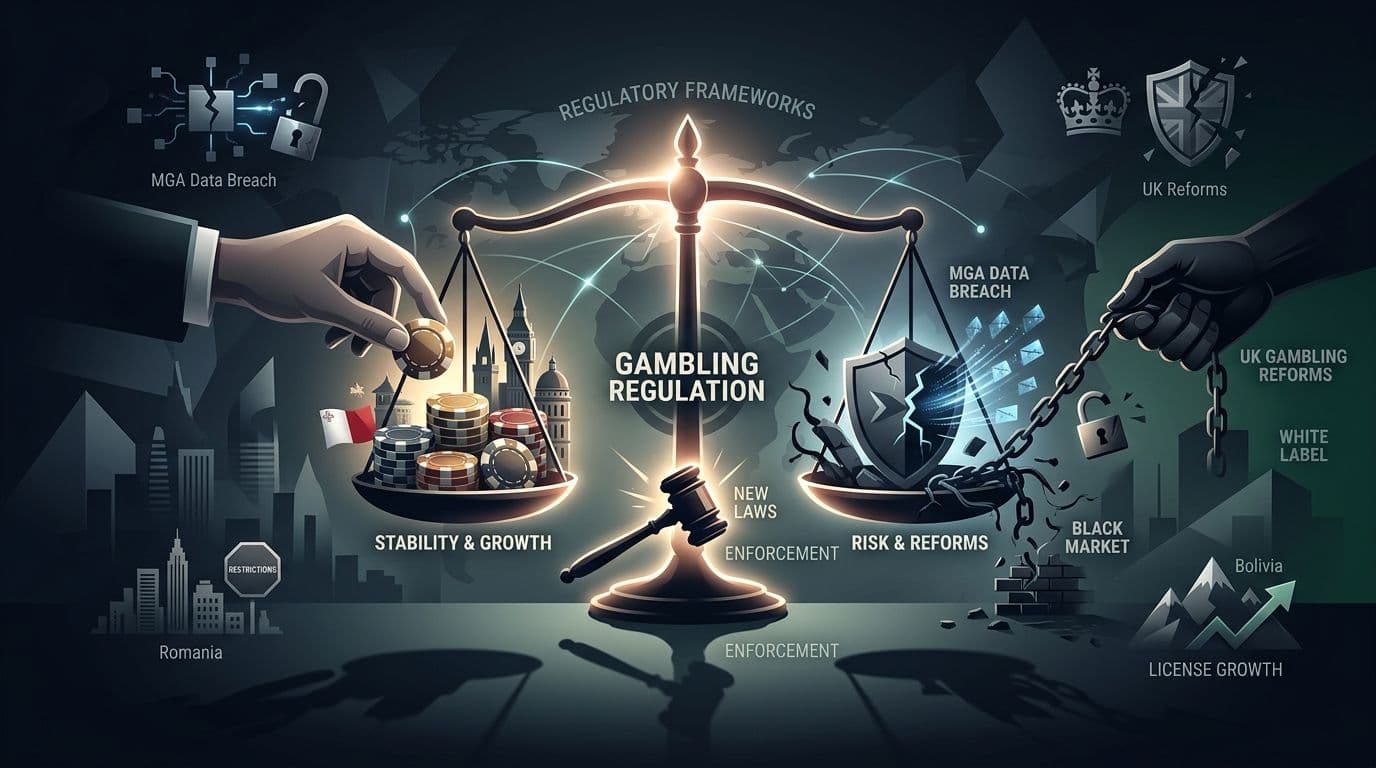


MGA Rocked by Security Breach and Damaging Allegations
The Malta Gaming Authority (MGA) is facing a significant crisis after a self-described German security researcher, Lilith Wittmann, claimed responsibility for a major system breach. Wittmann alleged she gained access to highly sensitive information, including operator compliance files and player records. The latest gambling regulation news from Malta took a serious turn when she publicly accused the regulator of enabling organized crime within the nation's gambling sector.
The MGA confirmed a breach occurred on March 17 and activated its internal response protocols, stating it was treating the event "with the utmost seriousness." However, in a follow-up statement, the authority condemned Wittmann’s claims as "unsubstantiated" and incompatible with lawful engagement. This is not Wittmann's first involvement in the industry; in March 2025, she exposed a vast player data breach across German gaming sites operated by Merkur Gaming, where 800,000 player accounts were compromised.
UK Navigates Dual Regulatory Overhauls
In the United Kingdom, two major policy shifts are causing significant debate and uncertainty. The government is considering new rules on sports sponsorships while simultaneously overhauling how gambling harm services are funded, a key part of the ongoing UK gambling reform.
Unlicensed Sponsorship Ban Creates White Label Uncertainty
The Department for Culture, Media and Sport (DCMS) has launched a consultation to ban unlicensed gambling operators from sponsoring football clubs. This move aims to cut off black market firms, often linked to organized crime, from reaching British consumers through the Premier League. The key question is how this will impact white label gambling partnerships, where an unlicensed brand partners with a UK-licensed operator.
Legal experts are divided. One opinion suggests the model should be safe if the government's focus remains on consumer protection. However, Melanie Ellis, a partner at Northridge Law, believes the future is uncertain, suggesting the government may seek to prevent arrangements where a brand uses a white label in the UK while operating unlicensed elsewhere. This follows scrutiny of BC Game, a Curaçao-licensed operator whose UK white label license was stripped, jeopardizing its deal with Leicester City.
Gambling Harm Levy Transition Draws Criticism
The transition to a new statutory gambling harm levy is causing alarm among charities. The Gambling Lived Experience Network (GLEN) has highlighted growing uncertainty after the Office for Health Improvement and Disparities (OHID) gave organizations just 13 days' notice on funding outcomes. This short timeframe leaves many specialist charities, often run by individuals with lived experience, facing difficult decisions about their ability to continue operating.
“A levy which was supposed to double or triple funding available to prevention and treatment will now be questioned as to why... the existing funding agreements in the system couldn't simply have been guaranteed and honoured over a period of two-three years while a full needs and impact assessment was conducted.”
GLEN criticized the process as "needlessly reckless," arguing that existing services should have been protected during the transition. The charity is now calling on the government to prove that lived experience is being meaningfully integrated into the new framework, not just used as a talking point.
Regulatory Shifts Across Europe and Latin America
Beyond the UK and the MGA data breach, other jurisdictions are also implementing significant regulatory changes with far-reaching consequences for the industry.
Romania's Retail Ban Sparks Black Market Fears
In Romania, new laws empower cities to close or restrict betting shops and slot machine halls, a response to what ministers call a "public health problem." Borut Petek, an executive at Superbet owner Super Technologies, warns this approach misses the mark. He argues the real battle is not retail versus online, but legal versus illegal gambling.
Petek expressed concern that poorly planned restrictions on the legal market will not reduce gambling demand but will instead push consumers towards the unregulated black market. This shift would result in a loss of tax revenue, consumer protections, and state oversight. He emphasized that for major institutional investors, regulatory predictability is paramount, a crucial factor as Romania seeks OECD accession.
Bolivia Reports Licensing Growth and Enforcement Success
In contrast, Bolivia’s Gaming Control Authority (AJ) reported a productive 2025, issuing 1,226 local gambling licences. This high number, according to the regulator, demonstrates a strong interest from operators to work within the legal framework. The AJ also intensified its enforcement efforts, raiding 82 illegal gambling establishments and destroying 230 illegal machines.
The authority's progress was further cemented by achieving ISO 9001:2015 certification, a mark of quality and standardized practices. While the market is growing, integrity concerns persist, particularly around match-fixing in football, reinforcing the need for the AJ's strong regulatory presence.
| Jurisdiction | Recent Regulatory Action | Key Concern / Goal |
|---|---|---|
| Malta (MGA) | Responding to a major system breach | Data security, institutional integrity |
| United Kingdom | Consulting on sponsorship bans; implementing a new harm levy | Curbing black market influence, funding treatment services |
| Romania | Empowering cities to ban retail betting shops | Addressing problem gambling as a public health issue |
| Bolivia | Issuing over 1,200 new licenses and raiding illegal venues | Strengthening the legal framework and enforcement |


