

Global Scrutiny Intensifies for Prediction Markets
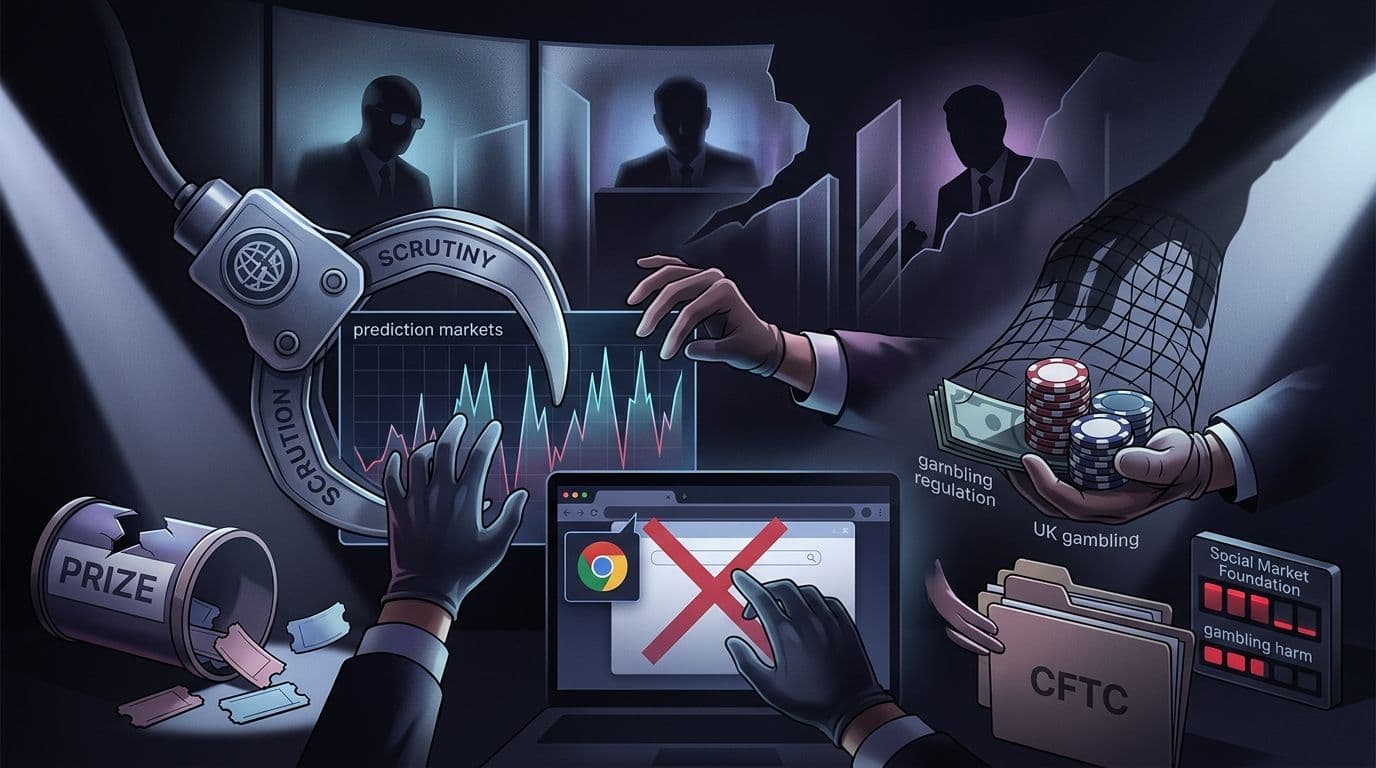
The operational environment for prediction markets is becoming increasingly complex due to heightened regulatory pressure across multiple jurisdictions. Both European nations and technology giant Google are implementing measures that challenge the current business models of platforms like Polymarket and Kalshi. These actions signal a growing global consensus to define and control these emerging financial and betting products.
Europe's Regulatory Wall: Czech Republic Blocks Polymarket
The Czech Republic has officially designated Polymarket as an unlicensed gambling operator, ordering internet service providers to block access to the platform within 15 days. This move aligns the country with a growing list of European nations including Italy, France, Spain, and Germany that have taken similar action. The Dutch regulator, Kansspelautoriteit (KSA), also recently upheld its decision to impose fines on the platform.
Czech officials argue that despite being framed as investment tools, these platforms are functionally betting services. Jan Řehola, Director of the Czech Institute for Gambling Regulation, supported the decision, stating that if a product "looks like a bet, functions like a bet, and allows people to win or lose money depending on the outcome of an uncertain event, we cannot stop treating it as gambling."
This perspective emphasizes that terminology alone cannot shield an operator from established gambling regulation. Řehola stressed the importance of applying the same rules for player protection, anti-money laundering, and market supervision to all operators, regardless of how they label their product.
Tech Giants Take Action: Google's Chrome Store Ban
Adding to the pressure, Google has announced it will prohibit browser extensions that facilitate or promote real-money prediction markets from its Chrome Web Store. The Google Chrome ban is set to take effect on August 1. This policy update will directly impact extensions linked to platforms such as Polymarket and Kalshi, which often provide real-time price alerts and simplified order placement.
The company stated its goal is to maintain user trust by ensuring the Chrome Web Store remains a secure platform. While extensions for real-money transactions are being banned, simulated products that do not offer cash prizes may remain. It is notable that this new policy does not affect the existing integration of Kalshi and Polymarket odds within the Google Finance platform.
Industry Responds with Regulatory Push
In response to the crackdown, the industry is organizing to advocate for a clear and supportive federal framework in the United States. At the same time, jurisdictions like Gibraltar are pioneering bespoke regulations, creating a potential model for others to follow. These efforts highlight a drive for legitimacy and stable operating conditions.
The Coalition for Prediction Markets Strengthens Ranks
The Coalition for Prediction Markets has appointed former CFTC commissioner Brian Quintenz as a senior adviser. Quintenz will provide strategic guidance on financial regulation and engagement with federal policymakers. The coalition, whose members include Kalshi, Crypto.com, and Robinhood, advocates for long-term CFTC authorization.
Quintenz argued that federal oversight is not a "zero-sum game against states" and that different regulatory regimes can coexist. However, he cautioned against inappropriate regulatory models, stating, "Slot machine regulation for derivatives markets won’t work."
A Contrasting Approach: Gibraltar's New Framework
While some nations move to block access, Gibraltar has established the world's first dedicated regulatory framework for prediction markets under its Gambling Act 2025. This creates a distinct category for these platforms with specific authorization requirements. Operators such as ADI Predictstreet and WagerWire have already received licenses or in-principle approvals, signaling Gibraltar's intent to become a hub for the regulated industry.
Regulatory Shifts in the UK Gambling Sector
In the United Kingdom, the UK gambling landscape is also experiencing significant developments on two fronts: the commercial prize draw market and public health policy concerning gambling-related harm.
Zeal Enters Prize Draw Market, Welcomes Stricter Rules
Lottery operator Zeal has expanded into the UK by acquiring prize draw operator Seven Canyon. Zeal's CEO, Dr Stefan Tweraser, expressed that the company expects and welcomes a move towards stricter, more formalized rules in the UK's prize draw sector. He believes Zeal's experience in Germany's highly regulated market will be a significant advantage.
The UK prize draws market currently operates under a voluntary code of conduct and is estimated to generate £1.3 billion in annual revenue. The acquisition of Seven Canyon is a strategic move for Zeal to establish a foothold in this growing and fragmented market.
| Metric | Value |
|---|---|
| Cash Consideration | £33.9 million |
| Potential Earn-Out | Up to £4.8 million |
| Recent Billings (SevenCanyon) | ~£99 million |
| Recent GGR (SevenCanyon) | ~£30 million |
| Recent EBITDA (SevenCanyon) | >£10 million |
SMF Pushes for Public Health Approach to Gambling Harm
The Social Market Foundation (SMF), a UK think tank, is calling for major reforms to integrate gambling harm into national health policies. The SMF argues for a public health approach, treating problem gambling similarly to alcohol and substance abuse. A key proposal is to equip first responders and frontline services with questions on gambling in standard patient questionnaires.
"The systems and processes of these services do not always enable the identification of harms, which means opportunities to identify gambling related harm are missed. Other barriers included a knowledge-action gap, lack of expertise, and long waiting lists creating pressure on services."
The SMF highlights international examples like New Zealand and Norway, where gambling harm reduction is already part of government health strategies. Norway's plan includes training for health service staff, bank employees, and family counselors to better identify and address problem gambling.


