


A Transformative Period for UK Gambling
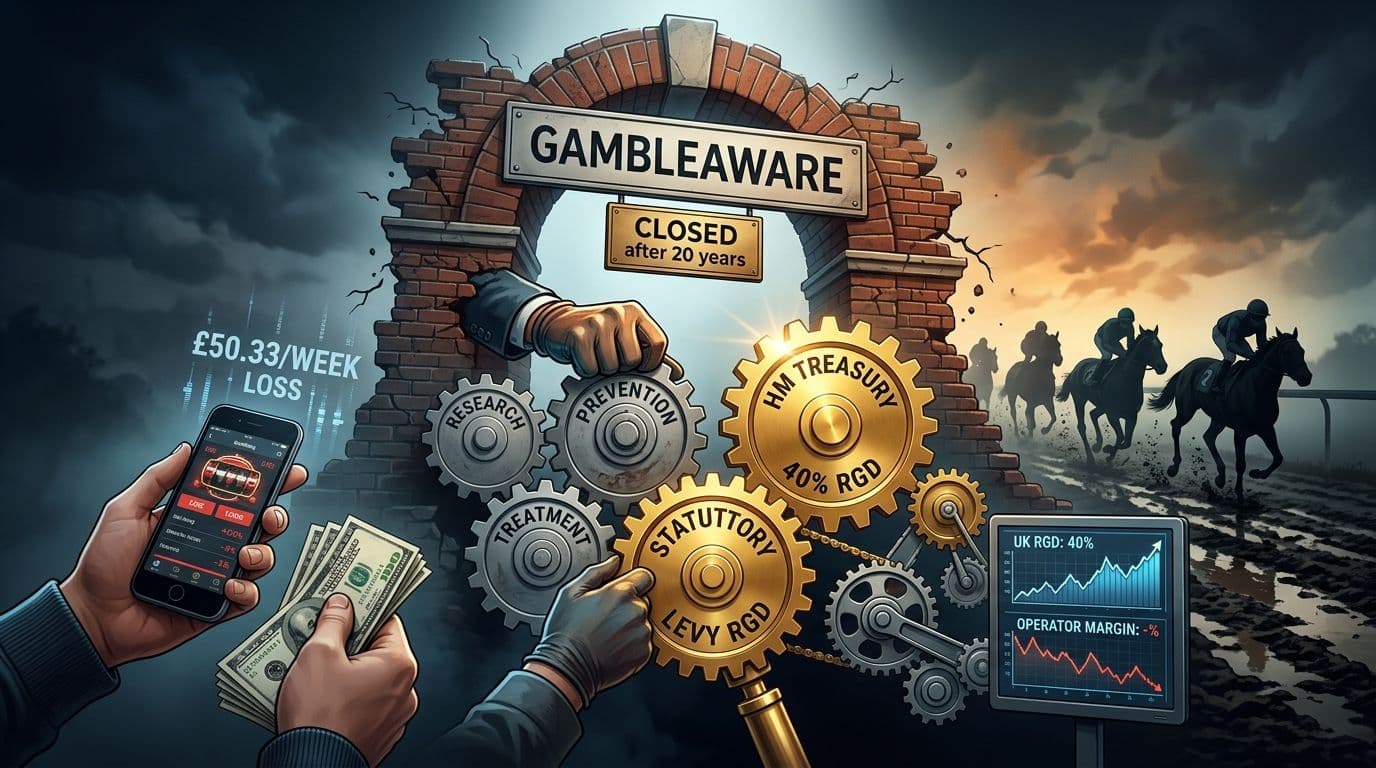
The UK gambling industry is navigating a period of monumental transformation. As of March 31, 2026, the charity GambleAware has officially closed its doors after a 20-year run as a key commissioner for research, prevention, and treatment of gambling harms.
This closure occurs on the eve of another seismic event: on April 1, 2026, HM Treasury's increase of the Remote Gaming Duty (RGD) from 21% to a staggering 40% takes effect. This tax hike is widely seen as the most significant outcome of the long-running Gambling Act review, forcing operators to navigate razor-thin margins in a challenging new economic environment.
The end of GambleAware marks a transition to a new statutory levy system managed by NHS England, the Office for Health Improvement and Disparities (OHID), and UK Research and Innovation (UKRI). However, this new framework is already facing criticism and causing significant disruption.
“Its closure, alongside that of other services to come, risks triggering a sector-wide brain drain that, if not carefully managed, will harm the most vulnerable service users.”
- Jordan Lea, Founder of Deal Me Out
The immediate impact is already visible. Gamban announced it is shutting down its flagship TalkBankStop programme - a joint initiative with GamCare and GamStop - after OHID determined it would no longer receive funding as a limited company.
Critics suggest that GambleAware's demise was a political misstep, with some believing it lobbied itself out of existence. Dan Waugh of Regulus Partners noted that while the charity established a strong reputation, "by the end, it had lost the trust of a wide range of stakeholder groups," and the new levy system is "exposed to new conflicts."
Horse Racing at a 'Breaking Point'
The new era of UK gambling regulation is pushing the historic horse racing industry to its limits. Industry experts speaking at the Illegal Gambling Prevention Summit warned that the combination of intense regulatory pressure and declining fan engagement is creating a perfect storm.
The changes are making the unregulated black market an increasingly tempting alternative for bettors. As industry veteran Vaughan Lewis stated, “If we were to think of a scenario where we could make the black market more attractive, I’d struggle to come up with much more that we could do.”
Simon French, Director of Orange County Services, described the sport as being "between a rock and a hard place." He noted that many punters are unaware of the difference between licensed and unlicensed operators, caring only about getting paid, while affordability checks and other frictions drive them away from the regulated market.
Alarming Trends in Student Gambling
While regulators tighten their grip, a new survey highlights a worrying trend among young people. The latest annual Student Gambling Survey from Ygam and Gamstop found that UK university students who gamble are losing an average of £50.33 per week. This figure has nearly doubled from the £27.24 reported just one year ago.
Key findings from the survey of 2,000 students include:
- While overall participation has declined from 78% in 2022 to 65% in 2026, those who gamble are spending more.
- A significant 53% of student gamblers stated their primary motivation was "to make money."
- Social media is a major influence, cited by 34% of respondents, reflecting increased exposure to gambling content from influencers.
- Nearly half (46%) acknowledged that gambling negatively impacted their university experience, leading to missed lectures and difficulties affording food.
European and Global Regulatory Contrasts
The UK's turbulent regulatory climate stands in contrast to developments across Europe and the globe, where different approaches are being tested.
In Sweden, a report commissioned by the Swedish Trade Association for Online Gambling (BOS) revealed a notable decline in problem gambling. The rate fell from 2.2% in 2008-09 to 1.3% in 2021, a 35% reduction. To further combat illegal gaming, the regulator Spelinspektionen has proposed practical measures for unlicensed operators to block Swedish players, such as geo-blocking and preventing registrations with Swedish details.
This stability is what major operators are seeking. Banijay Entertainment, parent of Tipico and Betclic, expressed confidence in regulated European markets like France and Germany. CEO François Riahi called Europe a region with "greater regulatory visibility and stability" compared to the US, despite challenges like Germany's "too tough" rules, which have fueled a significant black market.
A Global Snapshot of Gambling Regulation
| Country | Key Regulatory Action | Stated Goal / Impact |
|---|---|---|
| United Kingdom | RGD tax hike to 40%; new statutory levy system. | Increased tax revenue; uncertainty and disruption in harm prevention services. |
| Sweden | Proposing a "participant criterion" to block unlicensed sites. | Improve channelisation and combat the black market effectively. |
| Switzerland | Police raids on illegal poker operations. | Enforce strict gambling laws with severe penalties. |
| Nepal | Complete shutdown of all online betting apps and websites. | Total prohibition as part of a new government's reform agenda. |
Corporate Moves and Tech Innovations
Amid the regulatory shifts, the gaming industry sees continued high-stakes corporate maneuvering and technological advancement. In a major sports and gaming transaction, billionaire Tilman Fertitta has purchased the Connecticut Sun WNBA franchise from the Mohegan Tribe for a record-breaking $300 million.
The team will relocate to Houston in 2027 and be rebranded as the Houston Comets. This deal connects two major gaming entities, as Fertitta owns Golden Nugget casinos and is a major Wynn shareholder, while the Mohegan Tribe operates the successful Mohegan Sun casino.
In technology, payment provider Flexifai has demonstrated the power of AI in emerging markets. By deploying an AI-driven routing engine in Ghana, the company helped an online operator boost its transaction conversion rate from 43% to 73% in just 30 days by intelligently navigating payment infrastructure and detecting fraud patterns in mobile money systems.


