
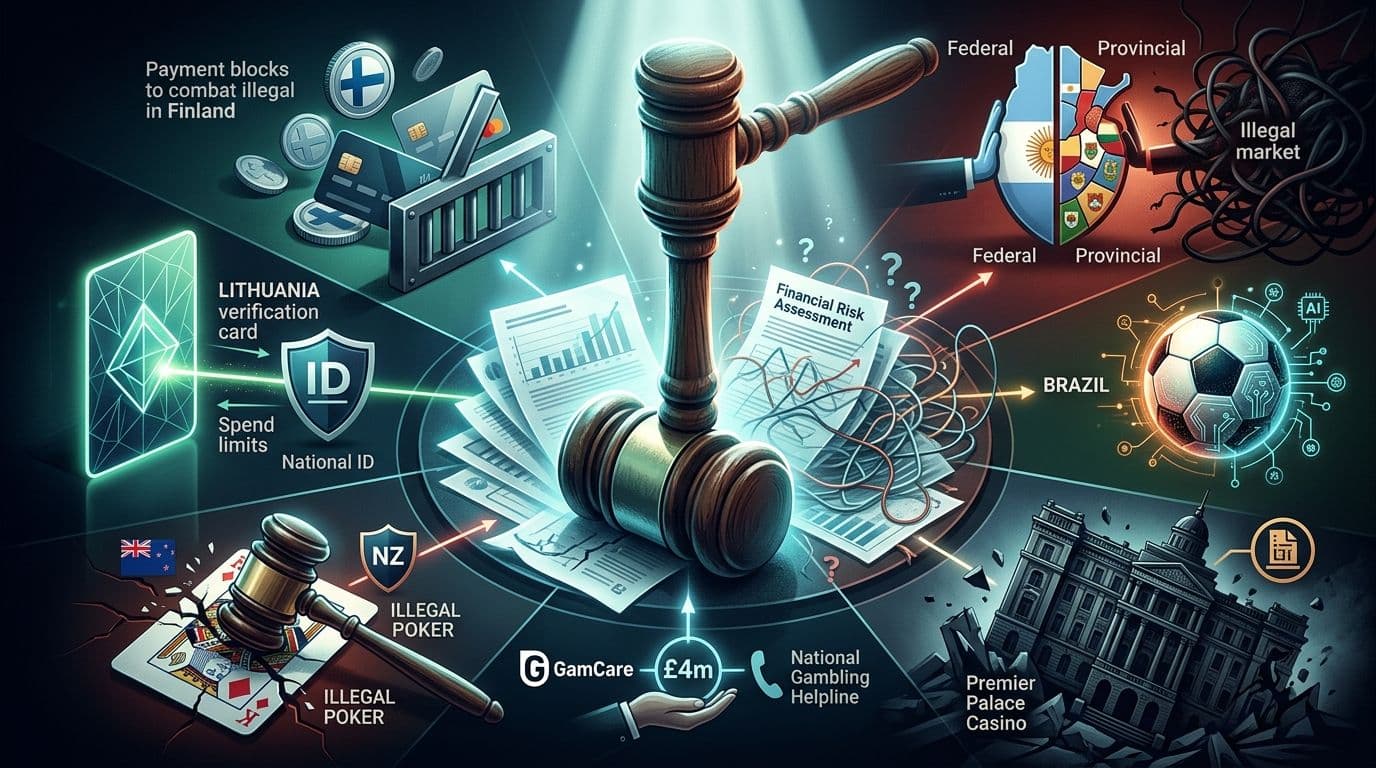


UK's High-Stakes Pause on Financial Risk Assessments
The UKGC's board met on May 21 but failed to reach a conclusion on the future of Financial Risk Assessments (FRAs). The commission stated it had not yet fully assessed the "extensive evidence base" from a pilot program that began in August 2024. This delay leaves a key component of the government's 2023 Gambling Act white paper reforms in limbo.
The proposed checks were intended as a harm-prevention tool, with the UKGC claiming they would be frictionless for 97% of customers and would not require players to submit documents like bank statements. However, the initiative has faced stiff opposition from a coalition of operators, politicians, and racing industry stakeholders who fear it will drive customers to the black market. A BGC-commissioned YouGov survey found 65% of UK bettors would refuse to provide such documents.
Legal experts suggest the delay indicates that the pilot program failed to resolve these core concerns. Sophie Kemp, a partner at law firm Kingsley Napley, noted the unresolved questions about data reliability and customer friction. The UKGC has not provided a new timeline for its decision, prolonging the period of regulatory uncertainty for the UK market.
Decisive Regulatory Action Across Europe
While the UK hesitates, other European nations are moving forward with definitive and strict new rules. The online casino regulation landscape is evolving quickly, with countries adopting clear, if sometimes stringent, new policies.
Lithuania Mandates Centralised Player Cards
Lithuania is set to become one of Europe's most controlled markets by implementing a Lithuania player card system by 2029. This mandatory card will be required for all gambling activities, linking a player's activity directly to their national ID and a personal profile. The Gambling Control Authority of Lithuania stated the goal is to enhance regulatory supervision and implement a responsible gambling policy.
The system integrates identity verification, spending limits, and self-exclusion into a single framework. Officials have stressed that while this increases the compliance burden on operators, it is a key part of a wider responsible gambling strategy, not a surveillance program.
Finns Favour Payment Blocks to Curb Illegal Gambling
Finland is also undergoing a major regulatory shift, moving away from its state monopoly model toward a licensing system set to launch in July 2027. A recent survey of 1,000 Finnish residents found that 32% believe blocking payments to unlicensed sites is the most effective tool to combat illegal gambling. The survey also revealed that 67% of Finns are aware of the upcoming legislative changes, signaling public engagement with the reform process.
Diverging Paths in Latin American Markets
In Latin America, regulatory frameworks and market dynamics show significant variation, from constitutional debates in Argentina to a technology-fueled boom in Brazil.
Argentina's Debate: Federal vs. Provincial Control
Argentina gambling laws remain a patchwork of provincial regulations, a system rooted in its constitution. While some experts argue for a unified federal framework to simplify operations and taxation, provincial regulators believe the current decentralized model is a strength. It allows for local adaptation and ensures gambling revenues are invested back into local communities.
"Far from being an obstacle, this decentralisation ensures that oversight remains local, close and effective. Provincial regulators understand that no one knows the territory and the needs of its population better than the provinces themselves." - Agustín Li Gambi, Director General of Legal Affairs at the Neuquén Provincial Institute of Gambling
Despite the lack of a federal system, regulators are increasing collaboration to fight the common enemy: a black market estimated to comprise 60% of all activity. Coordinated efforts now include website blocking with national agencies and an agreement with Meta to remove illegal gambling promotions from its platforms.
Brazil Gears Up for Tech-Led World Cup Betting
In contrast, Brazil is preparing for its first-ever legal World Cup betting season following the market's regulation at the start of 2025. Technology is the key competitive driver, with major operators using Kambi's solutions, including its in-house bet builder and AI-powered trading, to attract customers. This focus on product innovation highlights a market rapidly maturing and moving beyond simple marketing spend to gain an edge.
Global Enforcement Actions Target Illegal Operations
Regulators worldwide are increasing their enforcement efforts with a clear focus on the illegal gambling crackdown. From New Zealand to Ukraine, authorities are taking firm action against unlicensed activities and financial mismanagement.
Auckland Operator Charged Over Illegal Poker Rooms
In New Zealand, an Auckland man and his companies are facing multiple charges for allegedly running two illegal poker venues that generated over NZ$1 million. The operator faces charges under both the Gambling Act and the Crimes Act, with the latter carrying a potential seven-year prison sentence. This crackdown comes as New Zealand prepares to launch its own regulated iGaming market in 2027.
Kyiv's Premier Palace Casino Faces Liquidation
Meanwhile, in Ukraine, the Kyiv City Commercial Court has ordered the liquidation of the prominent Premier Palace Casino. The venue was declared bankrupt with debts exceeding UAH380 million ($8.6 million). The decision concludes a two-year legal battle and reflects a broader tightening of enforcement in the country, including the launch of a state-run platform to monitor all gambling transactions.
Key Industry Moves and Partnerships
The industry continues to evolve with key personnel changes and strategic partnerships highlighting areas of growth and focus.
GamCare Strengthens Leadership with New Appointment
UK gambling harm charity GamCare has appointed Chris Thornton as its new Director of Operations. This strategic hire follows the organization securing £4m from the Office for Health Improvement and Disparities (OHID) under the new statutory levy system. Thornton's extensive experience in the NHS and voluntary sector will be crucial as GamCare manages rising demand for its support services, including the National Gambling Helpline.
Light & Wonder Showcases Product Strength in Malta
Supplier Light & Wonder demonstrated its strong partnership with Tumas Group at a showcase event at Malta's Portomaso Casino. The company provides over 100 electronic gaming machines to the venue and will soon introduce its electronic table games to the Maltese market. The event underscored the value of long-term collaboration and product innovation in the land-based sector.


